
本文字数:约 5400 字,预计阅读时间:20 分钟
Hiring specialists made sense before AI — now generalists win
Tony Stoyanov, CTO and co-founder of EliseAI, argues that the era of hiring specialists is over, particularly in the context of rapid AI advancements. In the past, tech companies sought out specialists in specific domains such as backend engineering, data science, and system architecture. These roles were well-defined and stable, with technology evolving slowly enough to allow for deep expertise in a single area. However, the advent of mainstream AI has fundamentally changed this dynamic. New technologies emerge and mature in less than a year, making it impossible to hire specialists with years of experience in these rapidly evolving fields.
The pace of technological change is now so fast that the most valuable employees are those who can learn quickly, adapt rapidly, and act decisively without waiting for explicit direction. This shift is most evident in software engineering, a field that has seen dramatic changes and is evolving at an unprecedented rate. AI has reduced the barrier to entry for complex technical work while simultaneously raising the bar for what constitutes real expertise. McKinsey estimates that up to 30% of U.S. work hours could be automated by 2030, and 12 million workers may need to shift roles entirely.
At EliseAI, Stoyanov observes engineers who previously focused on backend coding now building UIs, and front-end developers moving into backend roles. The technology is becoming easier to use, but the problems are becoming more complex and multidisciplinary. In this environment, being an expert in one area is insufficient; what matters is the ability to bridge engineering, product, and operations to make swift decisions with imperfect information.
Despite the excitement around AI, only 1% of companies consider themselves mature in AI use, many still relying on structures designed for a slower era. Strong generalists, who have depth in one or two domains but breadth across many, are the ones thriving. These individuals exhibit traits such as ownership, first-principles thinking, adaptability, agency, soft skills, and range. They are accountable for outcomes, not just tasks, and possess the ability to integrate knowledge and think critically.
Stoyanov emphasizes the importance of accountability and prioritizing adaptable builders. The AI era rewards curiosity and initiative more than credentials, and companies should focus on hiring individuals who can grow into the roles needed as the company evolves. The future belongs to generalists and the companies that trust them.
LeCun的JEPA已进化为视觉-语言模型,1.6B参数比肩72B Qwen-VL
Yann LeCun, a prominent figure in the AI community, has advanced his previous work on Joint Embedding and Projection Architecture (JEPA) into a visual-language model. The new model, with 1.6 billion parameters, has shown performance comparable to the 72-billion-parameter Qwen-VL model. This development underscores the efficiency and effectiveness of JEPA in handling complex multimodal tasks.
The JEPA architecture is designed to integrate visual and textual information into a unified framework, enabling it to process and generate content that bridges the gap between images and language. This advancement is significant because it demonstrates that smaller models can achieve competitive performance with larger models, which is crucial for reducing computational costs and improving scalability. The model's success suggests that carefully designed architectures can leverage limited resources more efficiently, making high-performance AI more accessible.
The comparison between the 1.6B JEPA model and the 72B Qwen-VL highlights the ongoing challenge in the AI field to balance model size and performance. While larger models often provide superior performance due to their ability to capture more complex patterns, they also come with higher computational and environmental costs. LeCun's work on JEPA offers a promising direction for developing more efficient models that can be deployed in real-world applications without the need for massive computational resources.
This advancement is particularly relevant as the industry continues to grapple with the environmental impact of training large AI models and seeks more sustainable solutions. The success of the JEPA model in achieving competitive performance with fewer parameters points towards a future where AI models can be optimized for both efficiency and effectiveness.
人人都是导演:CineCtrl首个实现视频生成中的相机运镜与摄影效果统一控制
CineCtrl, a cutting-edge technology, has introduced a novel approach to video generation by unifying camera movement and cinematography effects within a single control framework. This innovation allows users to manage both the camera's motion and the visual effects seamlessly, effectively making everyone a director.
Traditionally, video editing and generation have required a high level of technical expertise to achieve professional results. CineCtrl simplifies this process by providing a user-friendly interface that allows for the intuitive manipulation of camera movements and cinematographic elements. This democratization of video creation tools can significantly impact the content creation industry, making high-quality video production accessible to a broader audience.
The unified control system of CineCtrl integrates various aspects of video generation, including camera angles, lighting, and special effects, into a cohesive platform. This integration not only streamlines the workflow but also enhances creativity by enabling users to experiment with different visual styles and techniques without the need for extensive technical knowledge.
The impact of CineCtrl extends beyond just simplifying the process; it also empowers content creators to produce videos that are both visually engaging and narratively compelling. This technology has the potential to revolutionize the way videos are created, making it easier for individuals and businesses to produce high-quality content for various purposes, from marketing and education to entertainment.
In summary, CineCtrl's innovative approach to video generation represents a significant advancement in AI and machine learning applications, bringing professional-level video production capabilities to a wider audience. This technology not only simplifies the creation process but also opens up new possibilities for creative expression in the digital age.
Anthropic公布新技术:不靠删数据,参数隔离移除AI危险

Anthropic, a leading AI research company, has unveiled a new technology that aims to mitigate the risks associated with AI systems without the need for data deletion. The technology, known as parameter isolation, works by segregating harmful parameters within the AI model to prevent them from influencing the system's outputs. This innovative approach addresses the ongoing challenge of ensuring AI safety and reliability.
Parameter isolation is particularly important as AI systems become more complex and pervasive in various domains, from healthcare to autonomous vehicles. By isolating parameters that could pose risks, Anthropic's technology ensures that AI remains beneficial and safe for end-users. This method provides a more nuanced approach to AI safety compared to traditional methods that rely on data deletion, which can be both impractical and ineffective.
The implications of parameter isolation extend beyond safety concerns. It also offers a framework for improving the interpretability and transparency of AI models. By identifying and isolating specific parameters, researchers and developers can gain deeper insights into how AI systems make decisions, leading to more accountable and trustworthy AI.
The release of this technology underscores Anthropic's commitment to advancing AI safety and ethics. It also highlights the growing importance of developing robust and ethical AI systems that can be trusted by users and regulators alike.
布局控制+身份一致:浙大提出ContextGen,实现布局锚定多实例生成新SOTA

Zhejiang University has introduced a new AI model called ContextGen, which leverages layout control and identity consistency to achieve state-of-the-art results in multi-instance generation. ContextGen represents a significant advancement in the field of AI-generated content, particularly in scenarios requiring high levels of coherence and consistency across multiple instances.
The model's innovative approach lies in its ability to anchor the layout and maintain consistent identities across generated instances. This capability is crucial for applications such as generating coherent scenes in virtual environments, creating consistent characters in video games, and producing uniform designs in industrial settings. ContextGen's performance in these tasks is a testament to its robustness and adaptability.
The development of ContextGen highlights the ongoing efforts to improve the quality and realism of AI-generated content. By addressing the challenges of layout control and identity consistency, the model paves the way for more sophisticated and versatile AI applications. This advancement not only pushes the boundaries of current AI capabilities but also opens up new possibilities for creative and practical applications across various industries.
对2025年中国游戏行业的简短总结

Despite a lack of groundbreaking new products, the Chinese gaming industry continues to show steady growth, driven primarily by the success of established titles, often referred to as "evergreen games." This trend underscores the enduring appeal and revenue potential of long-standing game franchises. However, the industry's reliance on existing titles also highlights the need for innovation and the introduction of fresh, engaging content to sustain growth and attract new players.
The continued success of evergreen games suggests that players value familiarity and depth, which these titles provide. However, the absence of new, impactful products raises concerns about the industry's ability to evolve and stay relevant in an increasingly competitive global market. The gaming sector must balance the stability provided by proven franchises with the need for innovative, forward-thinking content to maintain its growth trajectory.
人类的领导力,AI的生命力

The interplay between human leadership and the capabilities of AI is a critical aspect of modern productivity and innovation. AI's capacity sets the baseline for productivity, while human leadership determines its upper limits. This relationship highlights the importance of effective human oversight and strategic direction in maximizing the potential of AI technologies.
Effective leadership in the AI era involves not only technical expertise but also a strategic vision that can guide the integration of AI into various processes and systems. Leaders must navigate the complexities of AI implementation, ensuring that these technologies are used ethically and responsibly to enhance rather than replace human capabilities. The synergy between human leadership and AI can lead to transformative advancements, driving progress in fields such as healthcare, finance, and manufacturing.
小米大模型再亮剑,底层逻辑为何变了?
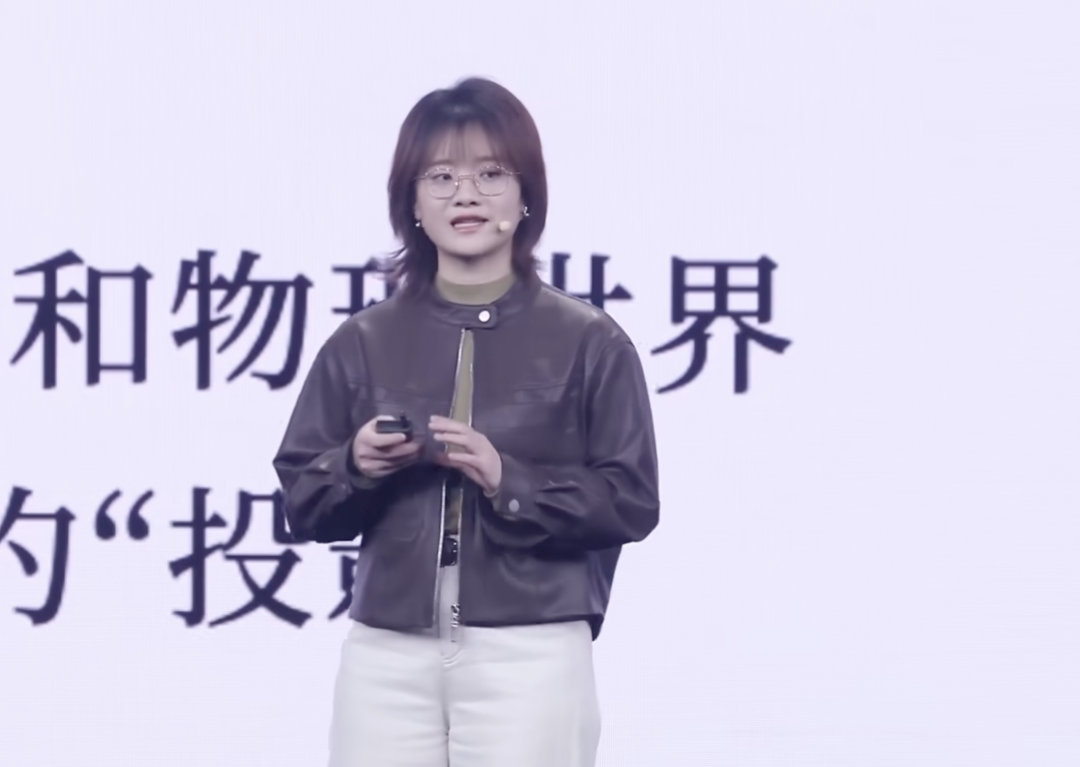
Xiaomi's latest advancements in large-scale AI models have introduced a shift in the underlying logic and approach to AI development. The company has emphasized the importance of optimizing models for efficiency, scalability, and real-world applicability. This shift reflects a broader trend in the AI industry towards more practical and sustainable AI solutions.
The new logic in Xiaomi's AI models focuses on balancing performance with computational efficiency. By optimizing models to run effectively on various devices, from smartphones to IoT devices, Xiaomi aims to make advanced AI capabilities accessible to a wider audience. This approach not only enhances user experience but also aligns with the growing demand for AI solutions that are both powerful and resource-efficient.
The underlying logic of Xiaomi's approach underscores the need for AI to be integrated seamlessly into everyday life, enhancing functionality without compromising on performance or resource utilization. This focus on practicality and efficiency is likely to influence future AI developments, fostering a new generation of AI technologies that are more attuned to real-world needs and constraints.
18年前,我们就画好了AI的蓝图

A look back at the visionary ideas and predictions about AI from 18 years ago highlights the remarkable progress made in the field. The early concepts and blueprints laid out in documents like "The AI Landscape" and "We Want from AI" have largely come to fruition, showcasing the foresight of early AI pioneers. These early visions have guided the development of modern AI technologies, shaping the trajectory of AI research and applications.
The comparison between past predictions and current advancements underscores the rapid evolution of AI and the accuracy of early projections. These blueprints have not only influenced technical developments but also ethical and societal considerations, ensuring that AI is developed responsibly and ethically. The ongoing impact of these early visions continues to inform the future of AI, guiding the development of more advanced and beneficial AI systems.
总结
今日AI领域的新闻聚焦于AI技术的最新进展和应用,包括Yann LeCun的JEPA模型在视觉-语言任务中的突破、CineCtrl在视频生成领域的创新、Anthropic的参数隔离技术、浙大提出的ContextGen模型、以及小米在大模型逻辑上的转变。这些新闻突显了AI在不同领域的广泛应用和持续创新,同时也反映了AI技术在效率、安全性、一致性等方面的不断进步。总体而言,今日的AI新闻展示了AI技术在不断推动科技进步的同时,也在探索更加高效和负责任的应用方式。
作者:Qwen/Qwen2.5-32B-Instruct
文章来源:VentureBeat, 钛媒体, 机器之心
编辑:小康